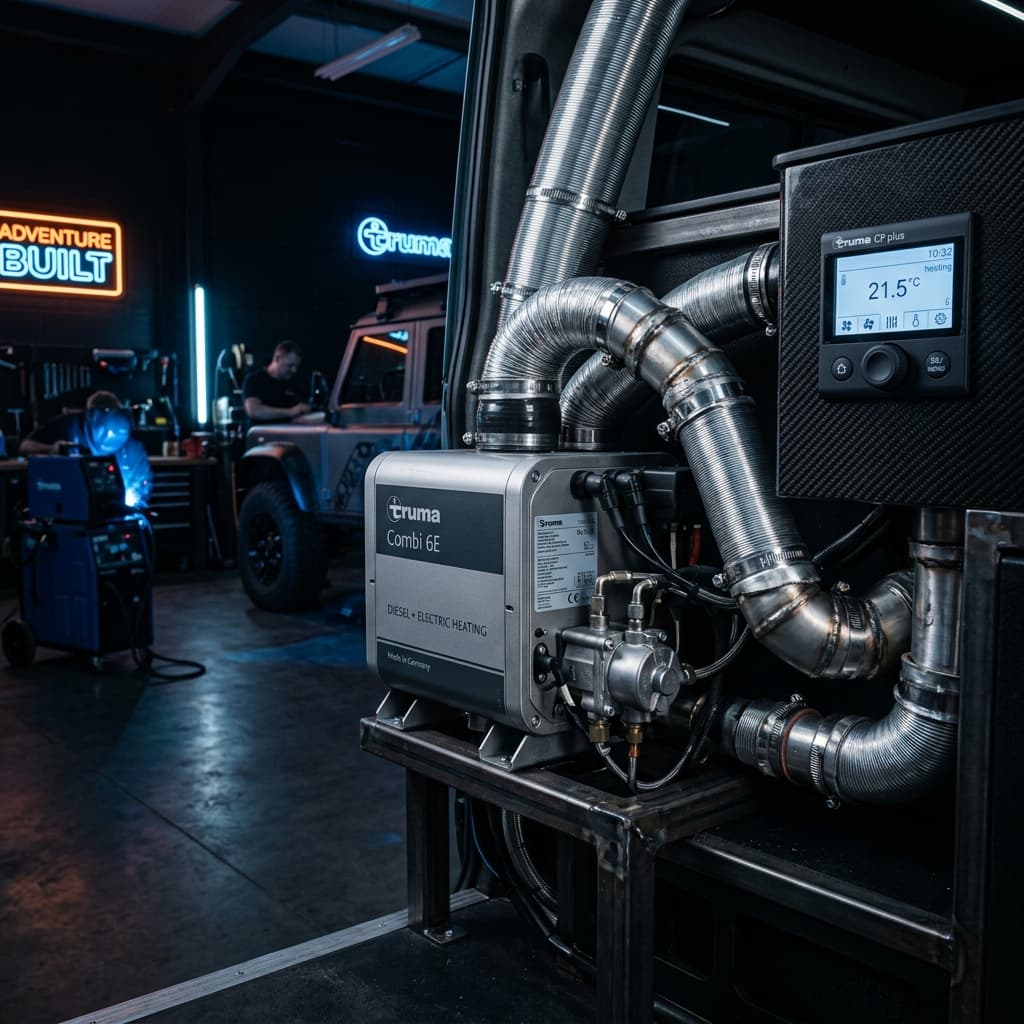
Webasto Air Top:
Installation Protocol
Professional guidelines for diesel heater integration. Fuel tank tapping, exhaust safety, and electrical wiring for UK builds.
Safety & Compliance
Installing a diesel heater involves cutting into your vehicle's fuel system and managing combustion exhaust. While there is no "Gas Safe" equivalent for diesel, your insurer will require that the installation follows the manufacturer's protocol to the letter.
Fuel System Integration
The most critical part of a Webasto installation is tapping into the vehicle fuel tank. We recommend using a **fuel standpipe** rather than a "T-piece" in the existing fuel line, as modern Euro 6 fuel systems are pressurized and can cause the heater to malfunction.
The 1/4 Tank Rule
When installing the standpipe, ensure it stops approximately 25mm from the bottom of the tank. This ensures the heater cannot drain your tank completely, leaving you enough fuel to drive to a station.
Exhaust Routing
The exhaust pipe gets extremely hot (up to 400°C). It must be routed away from fuel lines, plastic components, and air intakes. Crucially, the exhaust silencer should be mounted outside the vehicle perimeter, pointed slightly downwards to allow condensation to drain.
Electrical Connections
The Webasto Air Top draws significant current (up to 10A) during the startup "glow plug" phase. You must use the provided heavy-duty loom and connect directly to your leisure battery or a high-current distribution point like a Lynx Distributor.
Professional Webasto Air Top Installation Schematic
Eliminate the guesswork. Download our verified installation schematic including fuel standpipe depth charts, dosing pump angles, and wiring pin-outs for UK builds.